
Principles of Screening for Oral Health Practitioners
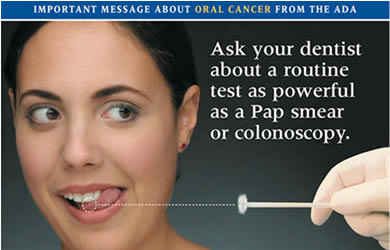





This session outlines the aims of health screening, with a focus on the perspective of patient care. It also illustrates how to carry out a thorough assessment of any screening test.
Learning objectives
By the end of this session you will be able to:
- state the aims of health screening
- list the main stages of disease progression
- identify the correct timing for a screening test
- explain how screening tests should be assessed
- outline the implications of screening for patient care
Health screening is a procedure that is performed to detect the presence of a specific condition. Members of a defined population are asked a question or offered a test to determine whether they will benefit from further tests or treatments. These individuals may not necessarily perceive or know that they are already affected by a disease or its complications.
Before commencing this session you should:
- be able to explain the difference between 'high risk' and 'population' based approaches to disease prevention
Paul qualified in 1980 from Liverpool University and worked within both the CDS and GDS for several years, during which time he obtained an MCDH from Birmingham and his DDPH. He then moved to London and worked in various academic posts at the Royal London, where he completed his PhD, King’s College London, and UCL. During this time he was awarded an FFGDP. He also holds an FDS and FPHM.
Paul has worked in various capacities for a number of organisations within dentistry including the BDA, the Department of Health, the DPB, the FGDP, the Scottish NHS Executive, and the WHO, as well as several national governments. He has also assisted a number of other bodies on dental matters including the Consumers Association, the Office of Fair Trading and the National Audit Office, and acted as the Advisor to the Health Select Committee on NHS dentistry. He was appointed President of the British Association for the Study of Community Dentistry in April 2004 and currently is the course director of the leadership and management programme in dentistry as well as national research co-ordinator for the Faculty.
Paul is also part of the Module Editorial Team at e-Den, and is co-Module Editor for Module 1 Patient Assessment, and Module 12 Management and Leadership.



- Introduction to MLCF: Demonstrating Personal Quali...
- Posted By eIntegrity Healthcare e-Learning
- Posted Date: 2024-07-24
- Location:Online
- This session introduces the Medical/Clinical Leadership Competency Framework domain - Demonstrating ...
- The Future of Leadership in Healthcare course for ...
- Posted By eIntegrity Healthcare e-Learning
- Posted Date: 2024-07-24
- Location:Online
- This session considers the potential changes in society and healthcare, and explores what these woul...
- National Organisations and Networks course for Ora...
- Posted By eIntegrity Healthcare e-Learning
- Posted Date: 2024-07-24
- Location:Online
- This session identifies some of the aspects of healthcare where key national bodies and organisation...
- Accountability in Healthcare Organisations course ...
- Posted By eIntegrity Healthcare e-Learning
- Posted Date: 2024-07-24
- Location:Online
- This session examines how and why NHS organisations are structured to achieve their goals. It explor...
- Successful Patient Outcomes course for Oral Health...
- Posted By eIntegrity Healthcare e-Learning
- Posted Date: 2024-07-24
- Location:Online
- This session examines how patient outcome measures contribute to national and local programmes looki...