Full Mouth Approach To Therapy course for Dental Practice
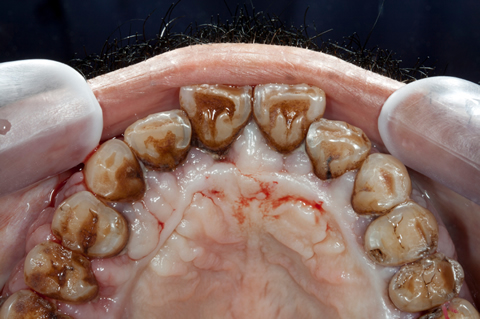
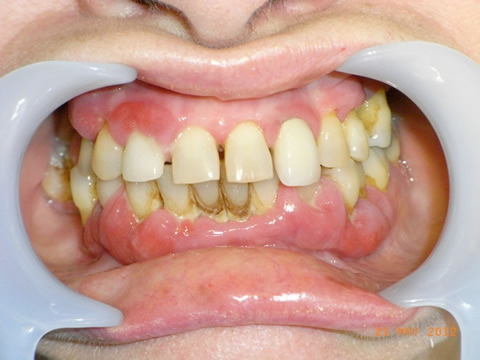
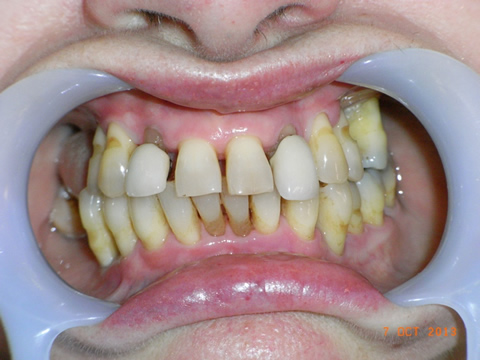


This session describes the concept of full mouth, non-surgical periodontal therapy, looking at the history of the development of the concept and the evidence base relating to its use.
Learning Objectives
By the end of this session you will be able to:
- Describe the concept of full mouth non-surgical periodontal therapy
- Evaluate the evidence relating to full mouth therapy
- Apply the principles of full mouth therapy in clinical practice
Most patients with periodontal diseases are managed non-surgically, that is, mechanical root surface debridement to remove all sources of bacterial contamination (bacteria and their toxic products) from the root surface.
Before commencing this session you should have completed e-Den sessions:
- Periodontal Disease and Management/Non-Surgical Periodontal Therapy/The nature of root surface contamination (141-0186)
- Periodontal Disease and Management/Aetiology of Periodontal Disease/The role of the bacterial biofilm (141-0164)
- Periodontal Disease and Management/Non-Surgical Periodontal Therapy/Periodontal instrumentation techniques (141-0184)
Phil qualified from King’s London in 1978. He joined the RAF after qualifying and was a general dental practitioner until taking an MSc in Periodontology in 1992, after which he was RAF Adviser in Periodontology and ran the RAF School of Dental Hygiene. After leaving the RAF he lectured at the Eastman Dental Institute and worked in several specialist practices. For 10 years he worked alongside Bernie Kieser at the Periodontal Practice in London and now practices at the Briars Dental Centre in Newbury. He is on the GDC’s Specialist Register. He has been an examiner for the Royal College of Surgeons of England (MGDS) and has served two terms on the Council of the British Society of Periodontology. Phil has had papers published in the Journal of Clinical Periodontology, Dental Update, Dental Practice and Independent Dentistry and is on the editorial boards of Dental Health and Primary Dental Care. He lectures throughout the UK, and is responsible for the perio component of the FGDP(UK) Diploma in Restorative Dentistry in both London and Manchester.
Phil is also the e-Den Module Editor for Module 4 Periodontal Disease and Management.



$55.80
- An Introduction to Sustainable Dentistry and Measu...
- Posted By eIntegrity Healthcare e-Learning
- Posted Date: 2024-05-02
- Location:Online
- This session provides an introduction to sustainability in healthcare and guidance on the practical ...
- Clinical Governance for Dental Practice
- Posted By eIntegrity Healthcare e-Learning
- Posted Date: 2024-05-02
- Location:Online
- This session will describe clinical governance and consider how its various components assure delive...
- Evidence-based Practice course for Dental Practice...
- Posted By eIntegrity Healthcare e-Learning
- Posted Date: 2024-05-02
- Location:Online
- This session describes the process of evidence-based practice. Learning Objectives By the end ...
- Consumer Agencies course for Dental Practice
- Posted By eIntegrity Healthcare e-Learning
- Posted Date: 2024-05-02
- Location:Online
- This session provides an outline of the roles that consumer groups have taken up in healthcare and t...
- Audit As A Tool For Quality Dentistry course for D...
- Posted By eIntegrity Healthcare e-Learning
- Posted Date: 2024-05-02
- Location:Online
- This session will firstly describe why we use audit in dentistry, its benefits and challenges. It wi...